How to Use an AED: Step-by-Step DRSABCD Guide
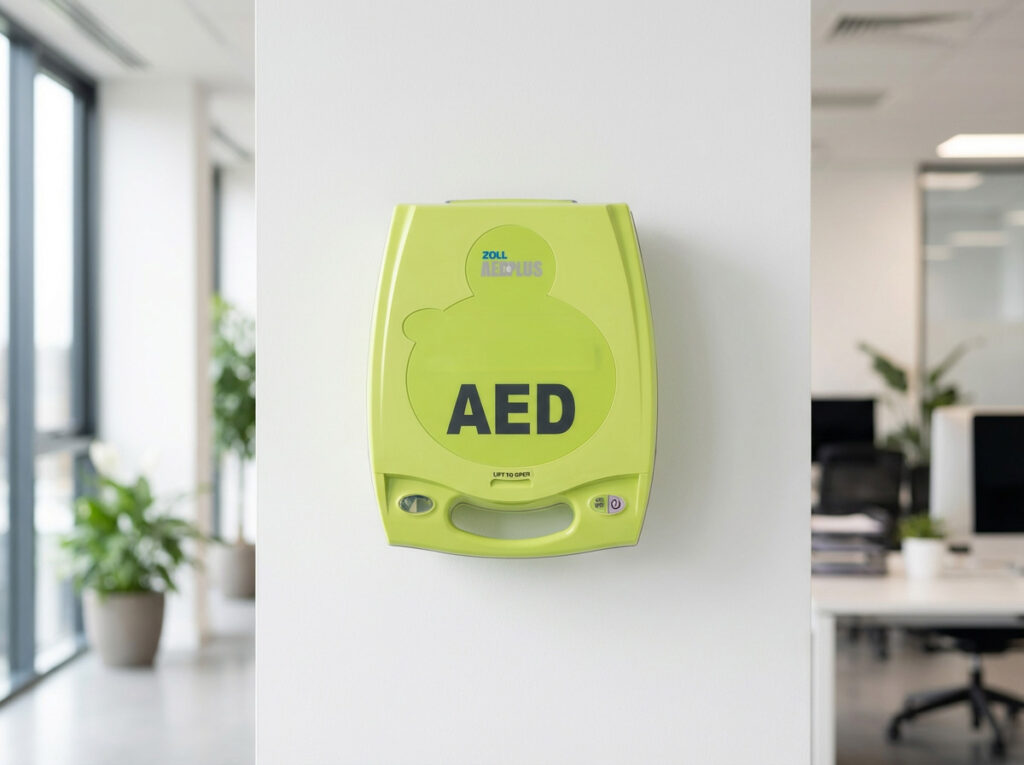
If someone collapses and is not breathing normally, an AED (automated external defibrillator) can help restart the heart. This guide explains how to use an AED, step by step, using the ZOLL AED Plus as an example.
How to Use an AED (Automated External Defibrillator)
Sudden Cardiac Arrest can happen anywhere, at any time. When it does, fast action matters. AEDs are designed so everyday people can help, even without medical training. The device tells you what to do, then you follow along.
DRSABCD Quick Checklist
Use this as a mental prompt in a high-stress moment.
- D - Check for DANGER
- R - Check for RESPONSIVENESS
- S - SEND for help (phone 111, retrieve AED)
- A - Open patient's AIRWAY
- B - Check patient's breathing
- C - Start CPR
- D - Use an AED
D – Danger
Before helping, check the area for danger. Look for traffic, electricity, water, aggressive behaviour, fire, or anything that could harm you or the patient. If it is not safe, do what you can to remove the danger or wait until it becomes safe to approach.
R – Response
Check if the person responds. Tap their shoulders and speak loudly. Ask “Are you okay?” then look for movement, speech, or any sign of awareness.
If they respond, keep them comfortable and monitor them. If they do not respond, treat this as an emergency and continue immediately.
S – Send for Help
Call emergency services straight away. In New Zealand, dial 111. Put your phone on speaker if possible so you can keep working.
If other people are nearby, point to someone specifically and give a direct instruction, for example: “You, call 111.” then “You, bring the AED.”
A – Airway
Open the airway with a head tilt and chin lift. Tilt the head back gently and lift the chin. This helps stop the tongue from blocking the airway.
Quickly check the mouth for obvious blockage. If there is vomit or food, roll them onto their side and clear it if safe to do so, then return them to their back.
B – Breathing
Check for normal breathing for up to 10 seconds. Look for chest movement, listen for breathing sounds, and feel for breath.
If they are breathing normally but remain unconscious, place them in the recovery position on their side and keep monitoring until help arrives.
C – CPR
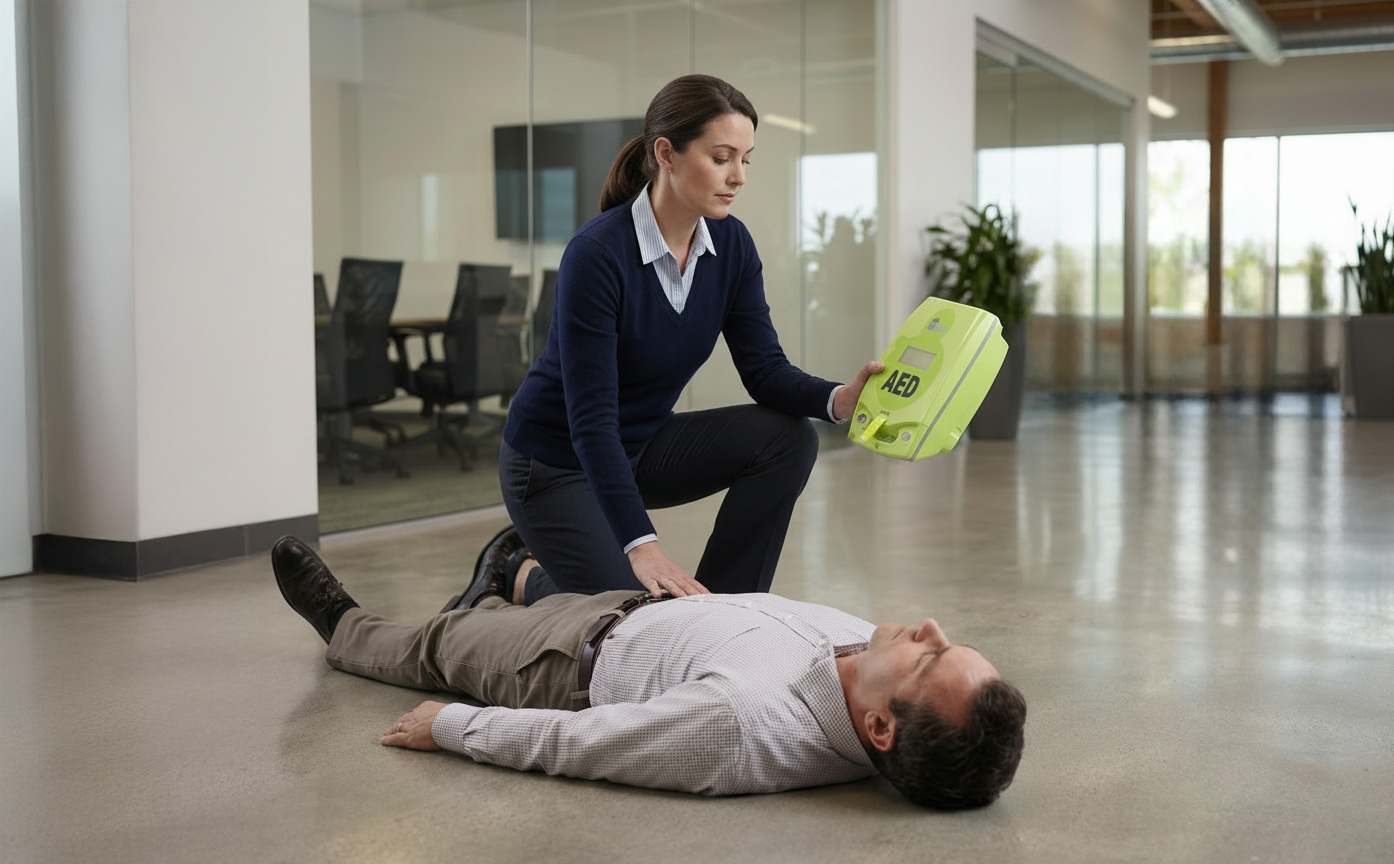
Start CPR right away. Place the person flat on their back on a firm surface, then kneel beside their chest. Put your hands in the centre of the chest and begin compressions.
CPR for Adults: Chest Compressions
- Hands in the centre of the chest.
- Arms straight, shoulders above hands.
- Push hard and fast at 100 to 120 compressions per minute.
- Allow full chest recoil between compressions.
- Minimise pauses.
If trained, use 30 compressions followed by 2 rescue breaths. If you are not trained or not comfortable giving breaths, do hands-only CPR continuously. The most important thing is that compressions start quickly and keep going.

D – Defibrillation: Use the AED
As soon as the AED arrives, turn it on and follow the prompts. AEDs are designed for laypeople. They analyse the heart rhythm and only advise a shock if it is needed.
1. Turn on the AED
Open the lid or press the power button. The device will start talking you through the steps right away. With the ZOLL AED Plus, the voice prompts are clear and easy to follow, which helps reduce panic.
2. Expose and prepare the chest
Remove clothing from the chest. Dry the chest if wet. If the chest is very hairy, quickly shave the pad areas if a razor is available. Remove any medication patches from the chest before applying pads.
3. Attach the pads
Apply the pads firmly to the bare chest exactly as shown in the diagrams. The ZOLL AED Plus commonly uses a one-piece pad design that helps speed up placement and reduce mistakes.
4. Stand clear while it analyses
Stop CPR when instructed. Ensure nobody is touching the patient while the AED analyses. Say “Stand clear” loudly so everyone understands.
5. Shock if advised
If the AED advises a shock, make sure everyone is clear, then press the shock button when prompted. If it says no shock advised, resume CPR immediately.
6. Resume CPR and follow the prompts
Start CPR again immediately after the shock, or after a no shock advised message. The ZOLL AED Plus provides CPR feedback that can help you maintain a good compression pace and depth.
Key AED Facts Everyone Should Know
- An AED only advises a shock when it detects a shockable rhythm.
- You cannot accidentally shock someone who does not need it.
- CPR is still essential, keep compressions going between AED prompts.
- AEDs are designed for everyday people, not just medical professionals.
- Having an AED on site is a strong safety step for homes, workplaces, clubs, and venues.
FAQ: How to Use an AED
Do I need training to use an AED?
No. AEDs are designed to be used by anyone. The device provides clear voice and visual prompts that guide you through the process. Training helps confidence, but following the prompts is enough to act.
What if I am scared of doing it wrong?
Start with the basics. Call emergency services, start CPR, then turn on the AED and follow the prompts. Doing something quickly is far better than doing nothing.
What if the AED says “no shock advised”?
Resume CPR immediately. Some cardiac arrest rhythms are not treatable by shock. CPR keeps blood moving while you wait for the next analysis cycle and for emergency services to arrive.
Can I use an AED for home use?
Yes. Many families choose an AED for home use, especially if there are cardiac risk factors. The biggest benefit is speed, since you do not need to wait for an AED to be brought from elsewhere.
Why do people choose the ZOLL AED Plus?
Many buyers value the clarity of prompts and the CPR feedback guidance. In a high-stress moment, having the device coach compression quality can help an untrained rescuer deliver better CPR.
Be Ready to Save a Life
Knowing how to use an AED gives you a clear plan in a cardiac emergency. Follow DRSABCD, start CPR, then let the AED guide you. You can make a life-saving difference.
View AED Options