Buying an AED (Defibrillator) in New Zealand: What You Need to Know
Buying a defibrillator in New Zealand is not an easy task. How do you choose the right one, and how do you know it will perform when you need it?
These are just some of the questions we receive on a daily basis. It is not just a case of popping down to the local electronics store and buying a new phone.
An AED (defibrillator) is a serious piece of medical equipment — it is a lifesaving device after all. As such, anyone looking to buy an AED should do their research thoroughly.
Key questions to ask any AED supplier
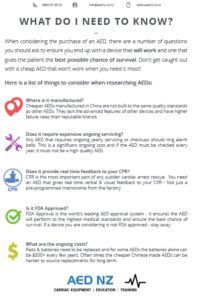
Where is the AED manufactured?
AEDs sold in New Zealand are manufactured in a range of countries. While location alone does not determine quality, it can sometimes indicate the regulatory frameworks and testing standards a device has been designed to meet. When comparing devices, look for recognised regulatory approvals, a strong manufacturer track record, and clear warranty and support.
As an example, an AED manufactured in China may not meet approval standards to be sold in the United States - for an AED to be sold in the United States, it must obtain FDA Approval - and many Chinese manufactured AEDs do not hold this status.
What should you know about AED testing and regulatory approvals?
Not all AEDs on the market have been evaluated under the same regulatory frameworks or clinical testing standards. One of the most widely recognised regulatory systems for medical devices is the United States Food and Drug Administration (FDA). AEDs sold in the United States must meet FDA requirements, which involve review of safety, performance, and manufacturing processes.
In New Zealand, medical devices must be listed with Medsafe; however, this is primarily a notification system rather than a pre-market approval process. For this reason, many purchasers look for devices that have also received approvals from major international regulators such as the FDA or Australia’s Therapeutic Goods Administration (TGA), as these approvals demonstrate that the device has undergone independent regulatory review and testing.
When comparing AEDs, consider the device’s regulatory approvals, manufacturer track record, warranty support, and clinical features to ensure you are choosing a device that has been properly tested and supported.
Does the AED require regular or yearly servicing?
If an AED requires regular or yearly servicing, confirm what is involved, whether the device needs to be sent away, and what the ongoing costs are. You should also check what happens if your AED is unavailable during servicing, and whether a loan unit is provided.
Does the AED provide real-time feedback to your CPR?
A shock is only required in some cardiac arrests, but high-quality CPR is always required. Consider an AED that provides verbal and visual guidance during CPR (for example, prompts telling you to push harder) and real-time feedback on CPR rate and depth, rather than relying only on a pre-programmed metronome.
The information above is intended as general guidance for buyers comparing AED features and regulatory approvals, and is based on publicly available manufacturer and regulatory information.
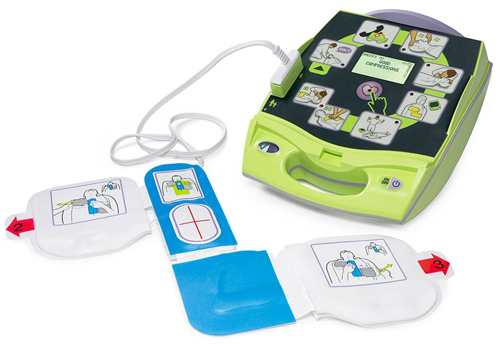
We Recommend the ZOLL AED Plus Defibrillator
- Compliant with New Zealand Resuscitation Council Guidelines
- FDA Approved
- ECG monitoring capability built into every device
- Lowest cost of ownership
- No yearly servicing plans or costly ongoing maintenance required
- 5 Year battery & pad life
- 7 Year Warranty
- IP55 Rated
- Made in USA