
With the increasing awareness of the life-saving potential of Automated External Defibrillators (AEDs), more people are investing in these critical devices for their homes and businesses. But with so many models available, how do you choose the right one? In this guide, we’ll break down the key factors to consider when selecting the best AED for your needs, ensuring you’re prepared in the event of a sudden cardiac emergency.
Ease of Use
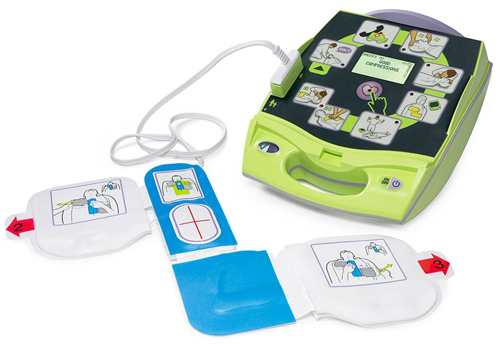
One of the most important factors to consider when purchasing an AED is how easy it is to use. Most AEDs are designed with simplicity in mind, but some models like the ZOLL AED Plus offer more intuitive features than others. Look for devices with:
Clear Voice Prompts: The AED should guide the user through each step of the process with clear, easy-to-understand voice instructions.
Visual Cues: In loud environments, visual prompts can help ensure the correct usage of the device.
CPR Feedback: The ZOLL AED Plus provides verbal and visual real time feedback, to your compressions, ensuring correct depth and rate to increase the patient’s chance of survival.
Durability and Portability
If you’re purchasing an AED for a workplace, school, or sports facility, you’ll want to choose a model that is both durable and portable. Here are some features to look for:
Waterproof and Dustproof Ratings: AEDs with an IP rating of 55 or higher are recommended for outdoor or harsh environments.
Battery Life: Long-lasting batteries are essential for AEDs in areas where they might not be used frequently. Look for devices with a battery life of four years or more.
Compact Design: In fast-paced environments, a lightweight and portable AED is essential for easy accessibility.
Maintenance and Warranty
AEDs need regular maintenance to ensure they’re ready to use in an emergency. Many modern AEDs come with self-check features that monitor the device’s readiness, but it’s important to consider the following:
Self-Diagnostics: Look for AEDs that perform daily, weekly, or monthly self-checks to ensure the device and its components (such as the pads and battery) are functioning properly – this also means a cost saving by not having to pay for expensive third party yearly services.
Warranty: Consider the length of the warranty and what it covers—this can provide peace of mind in case of unexpected issues.
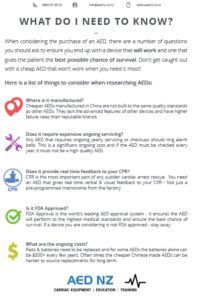
Cost of Replacement Pads and Batteries: Be aware of the ongoing costs of maintaining your AED, as pads and batteries will need to be replaced periodically, even if the device is not used. Cheaper Chinese made/imported AEDs can be harder to source replacement pads & batteries for.
Special Features
Some AEDs come with additional features that can be particularly useful in specific situations:
Pediatric Mode or Pads: If you’re purchasing an AED for a school, daycare, or any location where children are present, you may want to choose a model with a paediatric mode or separate paediatric pads designed for use on younger patients. These pads fit a child’s smaller chest better, as well as lower the shock rate.
CPR Feedback: AEDs like the ZOLL AED Plus offer real time CPR feedback, guiding users to perform chest compressions at the correct depth and rate. This feature can be especially helpful for those who may be untrained in CPR.
Regulatory Approval
Ensure the AED you are purchasing complies with New Zealand’s regulatory requirements. Devices that meet these standards are guaranteed to be safe and effective for use during a cardiac emergency.
FDA Approval: AEDs that are FDA approved have undergone rigourous testing and certification to prove their clinical claims are true, and guarantee the device you are purchasing will do what it says.
MedSafe Certification: Check that the AED you choose is certified by MedSafe, the New Zealand Medicines and Medical Devices Safety Authority. This ensures it meets the necessary safety standards.
TGA Approval: AEDs sold in New Zealand should also be approved by the Therapeutic Goods Administration (TGA) of Australia, guaranteeing they meet international safety and performance criteria.
Cost and Budget Considerations
While AEDs can vary in price, it’s essential to weigh the cost against the features and reliability of the device. Lower-cost AEDs are often made lacking features that are critical to improving the chance of patient survival – such as real time CPR feedback – as well as the consumables often costing more long term.
Conclusion: Which AED is Right for You?
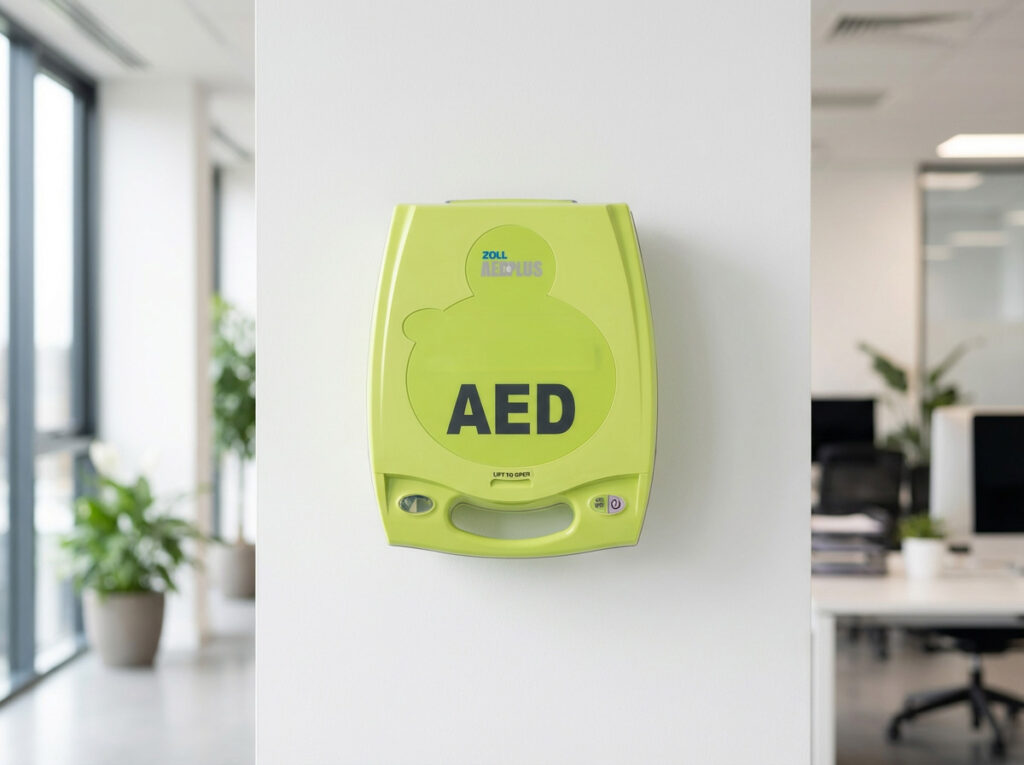
At AED NZ, we recommend the ZOLL AED Plus for homes, businesses, and public spaces across New Zealand. Explore our range of AEDs at www.aednz.co.nz and find the perfect defibrillator to protect your loved ones or employees today.
We recommend the ZOLL AED Plus Defibrillator
-
Compliant with New Zealand Resuscitation Council Guidelines
-
FDA Approved
-
ECG monitoring capability built into every device
-
Lowest cost of ownership
-
No yearly servicing plans or ongoing maintenance required
-
5 Year battery & pad life
-
7 Year Warranty
-
IP55 Rated
-
Made in USA