
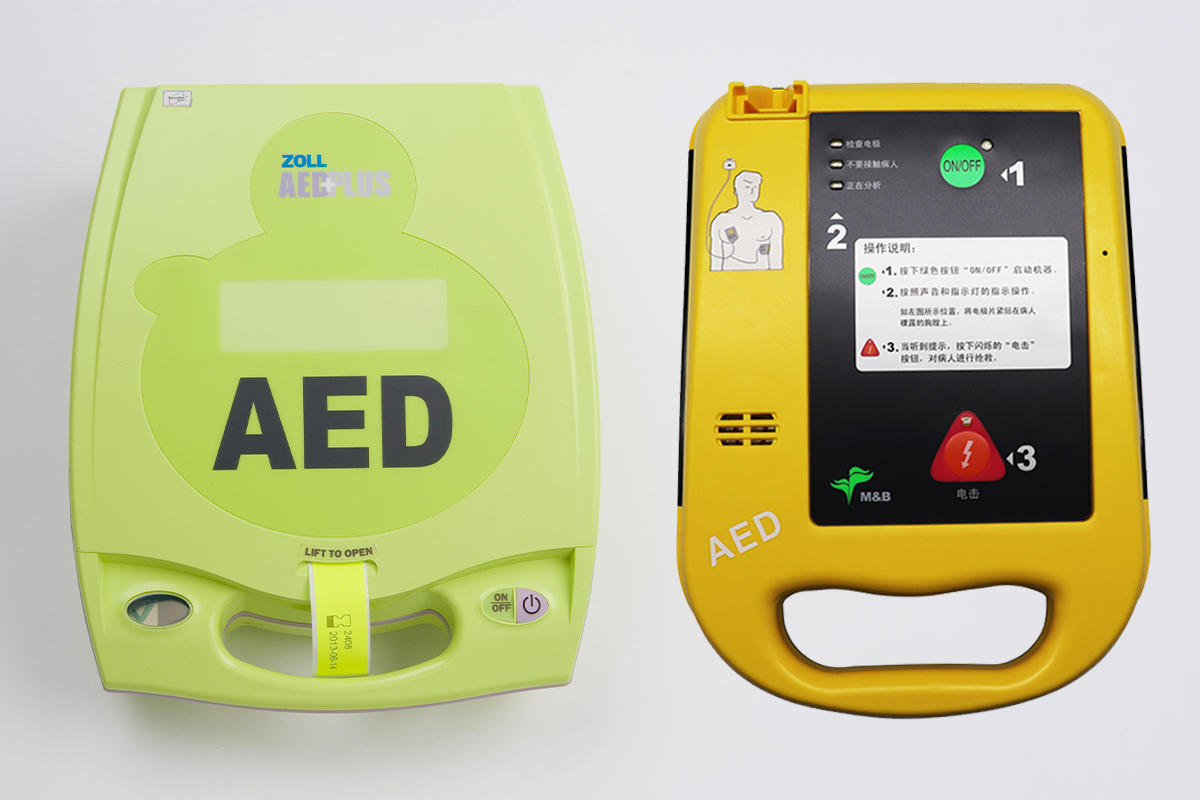
ZOLL AED Plus vs AED 7000: Which Defibrillator Should Your Workplace Actually Buy?
A side-by-side look at features, cost of ownership, and regulatory approval, with every claim sourced below.
Choosing an automated external defibrillator (AED) for a workplace, gym, school, or public venue means weighing more than the upfront price. What happens in the three or four minutes after someone collapses, and whether the AED you have is actually cleared for use by regulators who test this equipment for a living, matters just as much.
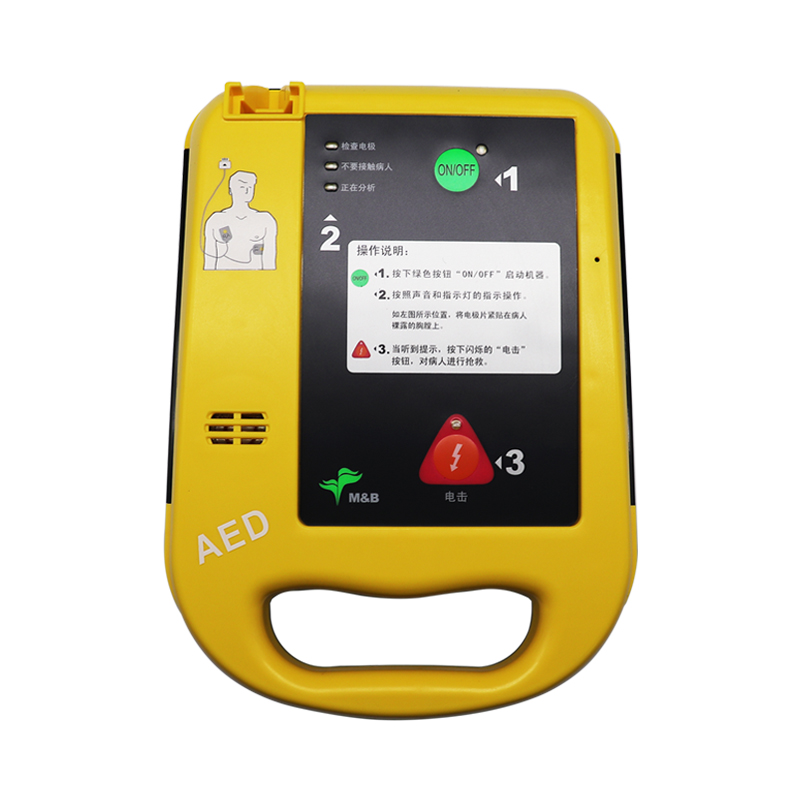
Two models frequently compared by New Zealand buyers are the ZOLL AED Plus (manufactured by ZOLL Medical Corporation, USA) and the AED 7000 (manufactured by Beijing M and B Electronic Instruments Co, China).
We've laid out the comparison below, cross-checked against manufacturer documentation and the FDA's public device database, so you can see exactly where the numbers come from.
The short answer
The ZOLL AED Plus is FDA-approved, gives rescuers real-time compression depth and rate feedback, and works out cheaper to run over 10 years, with fewer replacement actions needed. The AED 7000 has no FDA approval on record and relies on a fixed metronome rather than measuring what the rescuer is actually doing.
Full spec comparison table
| Feature | ZOLL AED Plus | AED 7000 |
|---|---|---|
| Product |

|
|
| Manufacturer / origin | ZOLL Medical Corporation, USA[1] | ARI Medical Technology / Perlong Medical, China[6] |
| FDA approval | Yes[2] | No[3] |
| Real-time CPR feedback | Yes: Real CPR Help® measures actual compression depth and rate via CPR-D-padz and gives live voice coaching[1][4] | No depth/rate sensing, pre-programmed metronome prompts only[3] |
| IP (ingress protection) rating | IP55 (dust and water resistant)[1][3] | Not published by manufacturer[3] |
| Electrode pad expiry | 5 years[3] | 2 years[3] |
| Battery expiry | 5 years[3] | 5 years[3] |
| Pad replacement cost | NZ$199.00[3] | NZ$129.00[3] |
| Battery replacement cost | NZ$125.00[3] | NZ$199.00[3] |
| Total replacement actions over 10 years | 2 | 5 |
| 10-year consumables cost | Pads $199 + Battery $125 = $324 total[3] |
Pads $516 + Battery $199 = $715 total[3] |
| Warranty | 7 year manufacturer warranty[5] | 5 year warranty |
| Active assistance in all rescue scenarios | Yes[3] | No[3] |
Pricing shown reflects NZD figures published in the comparison source cited as [3] at time of writing and may change.
Why real-time CPR feedback matters
This is the single biggest functional gap between the two devices. The American Heart Association and European Resuscitation Council guidelines both stress that compression depth and rate directly affect survival odds. Too shallow and you're not perfusing the brain and heart; too fast or too slow and effectiveness drops off.
The ZOLL Real CPR Help® system uses the CPR-D-padz sensor to measure how deep and how fast compressions actually are, then gives the rescuer live spoken corrections ("push harder," "good compressions") during the rescue[1][4]. The AED 7000, by contrast, plays a fixed-tempo metronome and voice prompts, but does not measure what the rescuer is doing[3]. It can tell a bystander to compress at 100 to 120 per minute, but it can't tell them whether they're actually hitting that rate or pushing deep enough.
Most AEDs get used by untrained bystanders, so the difference between passive prompting and active, corrective feedback can matter a great deal.
FDA approval: a meaningful regulatory bar
The ZOLL AED Plus holds full FDA Approval (PMA number P160015), the FDA's most rigorous device approval pathway, requiring clinical evidence of safety and effectiveness[2]. It also carries CE marking under EU Medical Device Regulation[1].
The AED 7000 is not FDA approved.
Devices sold in New Zealand don't strictly require FDA approval to be supplied here, but FDA approval is a widely recognised proxy for the depth of clinical and safety testing a device has been through, and its absence is worth asking your supplier about directly.
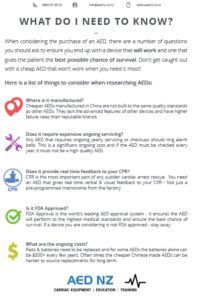
Buyer tip: Before buying any AED, ask the supplier for the device's FDA approval status number and clinical studies that prove its efficacy. A device that can't produce these on request is one to be cautious about.
Total cost of ownership adds up differently than sticker price
AEDs are a 10-year-plus asset, and consumables (pads and batteries) are where the real cost difference shows up:
- The ZOLL AED Plus needs pads and a battery replaced once every 5 years, 2 replacement actions over a decade, totalling roughly $324 in consumables[3].
- The AED 7000 needs pads replaced every 2 years and a battery once every 5 years, 5 replacement actions over a decade, totalling roughly $715 in consumables[3].
Factor in the labour and admin time of replacing pads more than twice as often, and the "cheaper" option can end up costing more to run, before you even weigh the missing CPR feedback and FDA approval.
The bottom line
Both devices are marketed as AEDs for public-access and workplace use. On the criteria that matter most in an actual cardiac arrest, namely measured CPR feedback, regulatory clearance, and long-term running cost, the ZOLL AED Plus comes out ahead on every point in this comparison.
Ready to talk AEDs?
Get a straight answer on which device suits your site, your budget, and your compliance obligations.
Get a ZOLL AED Plus QuoteFrequently asked questions
Is the ZOLL AED Plus FDA approved?
Yes. The ZOLL AED Plus holds FDA Premarket Approval (PMA) number P160015, the FDA's most rigorous approval pathway for medical devices, and also carries CE marking under EU Medical Device Regulation.[1][2]
Is the AED 7000 FDA approved?
No.[3]
What is Real CPR Help and why does it matter?
Real CPR Help® is ZOLL's real-time feedback system that measures actual chest compression depth and rate through the CPR-D-padz sensor, then gives the rescuer live spoken corrections. The AED will speak outloud to you with prompts such as "PUSH HARDER" and "GOOD COMPRESSIONS", along with a visual indication of CPR rate and depth on the AED's screen.
This differs from a fixed metronome, which only prompts a target pace without checking whether the rescuer is meeting it.[1][4]
Which is cheaper to own long-term, the ZOLL AED Plus or the AED 7000?
The ZOLL AED Plus is cheaper over a 10-year period. It needs pads and a battery replaced once every 5 years (2 replacement actions, roughly $324 total)
The AED 7000 needs pads replaced every 2 years plus a battery every 5 years (5 replacement actions, roughly $715 total).[3]
Where is the ZOLL AED Plus manufactured?
The ZOLL AED Plus is manufactured by ZOLL Medical Corporation in the USA.[1]
The AED 7000 is manufactured in China by Beijing M and B Electronic Instruments Co[6]
Sources
View all sources and citations
- ZOLL Medical Corporation, "ZOLL AED Plus" product page: zoll.com/en-us/products/emergency-care/aeds/aed-plus
- U.S. Food & Drug Administration, Premarket Approval (PMA) database, ZOLL AED Plus, PMA P160015: accessdata.fda.gov/scripts/cdrh/cfdocs/cfpma/pma.cfm?id=P160015; supporting documentation: AED Plus Administrator's Guide, accessdata.fda.gov
- AED NZ, "Automated External Defibrillator (AED) Comparison": aednz.co.nz/automated-external-defibrillator-aed-comparison (source of comparative pricing, pad/battery expiry, IP rating and CPR-feedback figures used in the table above)
- ZOLL Medical Corporation, "Real CPR Help" clinical/product overview: aed.com/zoll-aed-plus-new.html
- Performance Health / authorised ZOLL reseller, "Zoll AED Plus" warranty and specification listing: performancehealth.com/zoll-aed-plus
- Beijing M and B Electronic Instruments Co "AED-7000 Automated External Defibrillator" manufacturer listing: aednz.co.nz/automated-external-defibrillator-aed-comparison/
All figures were current as of the publication date of this article and are drawn from the manufacturer and regulator sources listed above. Pricing, warranty terms and regulatory status can change, so we recommend verifying current details directly with ZOLL, the FDA database, and your AED supplier before purchase.