When time is critical, every second counts. If you’re placing an automated external defibrillator (AED) outdoors – for example at a sports field, public park or community venue in New Zealand – choosing a proper outdoor cabinet and maintaining readiness is key.
Below is an overview of the pros, cons and key considerations for storing an AED outdoors in New Zealand.
Pros of Outdoor Cabinet Storage
Improved accessibility & visibility
- An outdoor cabinet makes the AED accessible 24/7 (or as close as possible) without relying on building opening hours.
- Visible signage and placement in a prominent outdoor position increase chances it will be found when needed.
- For venues like sports fields , having an AED visible adjacent to the field or clubhouse means quicker deployment.
Protection from the elements
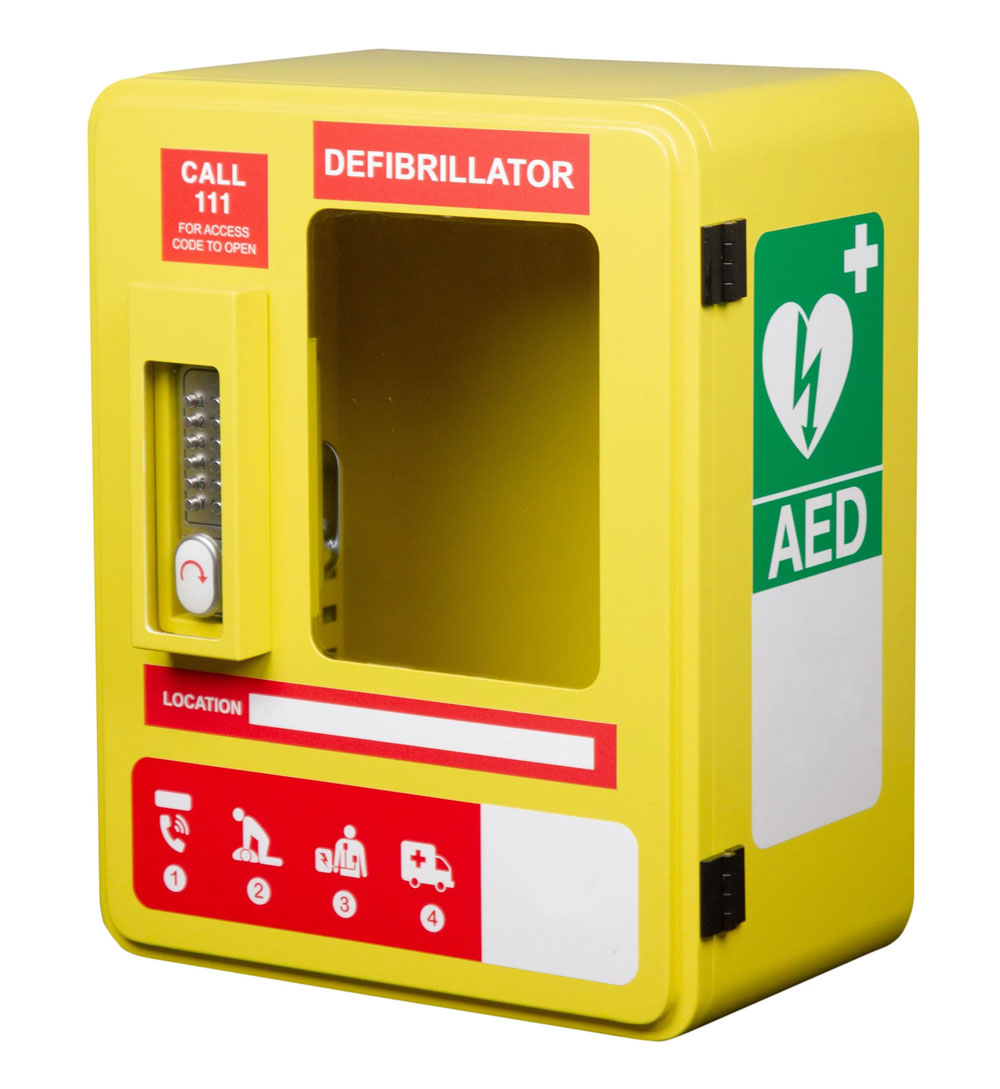
- Purpose-built outdoor cabinets are designed to protect the AED from rain, wind, dust and UV exposure. For example, the cabinet we supply is galvanised steel, wall-mountable, weather-resistant.
- It is important to keep the AED cabinet protected from direct weather exposure, especially in harsher coastal environments. We recommend storing the AED under cover, and kept away from salt-spray.
Keeps AED onsite at high-risk locations
- If you manage venues where community gatherings occur (like sports clubs and community halls), an outdoor cabinet means the AED is right where the risk is, reducing delay.
Encourages public-access readiness
- Outdoor cabinets signal that the AED is for public use, raising awareness.
- Registration with a national register (see below) combined with outdoor placement increases the chance someone will locate the unit in an emergency.
Cons and Risks of Outdoor Cabinet Storage
Exposure to environmental extremes
- While cabinets mitigate many risks, outdoor locations still expose AEDs to temperature extremes (very hot sun, freezing winter, moisture/humidity). Batteries and electrode pads degrade faster under stress.
- If the cabinet isn’t suitable for the install location, the AED could become damaged (rain, salt-spray, heat, cold) and may not operate correctly when needed.
Vandalism, theft or misuse
- Outdoor access brings higher risk of vandalism, theft, accidental damage or unauthorised use. Alarmed or locked cabinets may mitigate this.
Maintenance burden and hidden readiness gaps
- Because outdoor units are more vulnerable, they require more frequent checks.
- There’s a particular risk: someone might retrieve the AED only to find the battery flat or pads expired.
Signage and locating issues in dark or remote outdoor settings
- If outdoor cabinet is poorly lit or signage is inadequate, someone under stress may struggle to find the AED quickly. For example, weather-proof doesn’t necessarily equal well-lit at night or visible across a large field.
Potential misconception of “set-and-forget”
- There’s a risk that once installed outdoors, few people think to inspect it regularly. Outdoor placement can lull organisations into a false sense of security unless maintenance is actively managed.
Summary – What to keep in mind
-
Installing an outdoor cabinet for an AED is a very good step if the AED needs to be accessible at all times and you anticipate use in a public or semi-public outdoor environment.
-
It is not enough just to install the cabinet and mount the AED; readiness relies on accessibility, maintenance and registration.
-
Registering the AED with AED Locations (and ideally with St John’s AED registry) is highly recommended, it increases the chance that someone will find the device in an emergency and that 111 dispatchers can direct people to it. But registration alone does not guarantee that the AED will work or be accessible.
-
For outdoor cabinets in New Zealand: choose the right materials, protect against the elements, ensure signage/lighting/access, and schedule regular checks to ensure the device is not forgotten and becomes out of service.